Article Courtesy of Pumps & Systems
By: Steve Cox, Regional Sales Manager at PSG, a Dover Company
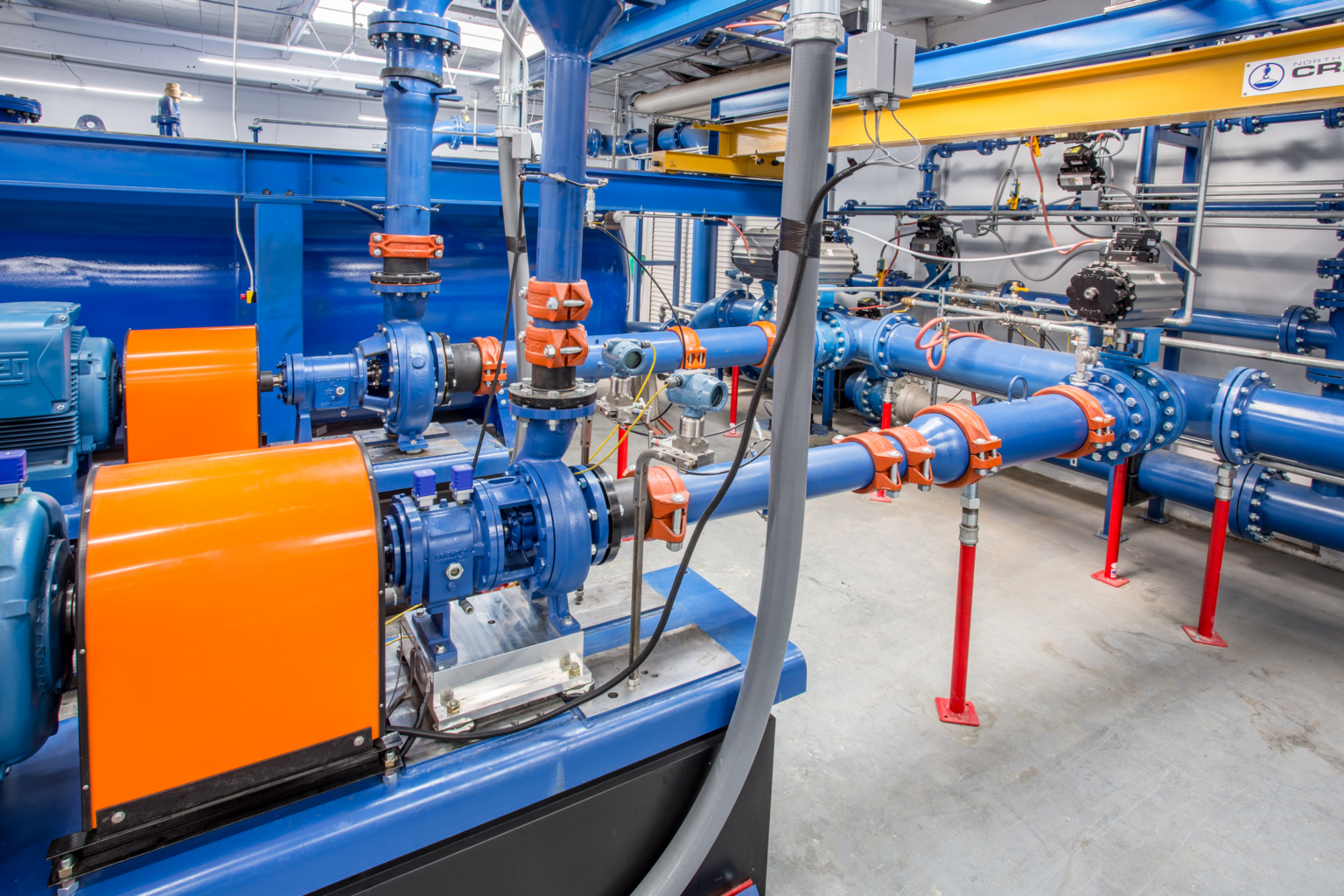 IMAGE 1: Centrifugal pumps built to American Society of Mechanical Engineers (ASME) B73.1, National Science Foundation (NSF) 50 and NSF 60 standards undergo quality assurance testing before deployment
Matching the pump to the application for minimal downtime and maximum efficiency.
It is two in the morning and a failed pump has brought the chemical process line to a standstill. A technician has been called in, but every minute they spend on repairs is a minute spent not operational. It might be a seal that gave out in corrosive service, a bearing that ran hot for weeks before finally breaking or a ruptured diaphragm from abrasive slurry. The incident report will state the specific mode of failure. What it will likely not say is that the pump was wrong for the application, instead asserting that the downtime and lost production that followed were consequences of poor pump specification.
Selecting the right pump is not just about picking a piece of equipment; it is about matching the right technology to the right job. To make the best choice, users need to understand how each pump works, the specific conditions where it shines and its operational limits.
Centrifugal Pumps for High-Volume, Low-Viscosity Fluids
Centrifugal pumps transfer rotational energy from a motor-driven impeller to the process stream, converting velocity into pressure in the volute casing. Continuous, high-volume flow with minimal mechanical complexity makes them the default choice for water-like process streams, light solvents and dilute acids and caustics. Additionally, fewer internal components mean fewer wear points, lower parts inventory and simple maintenance procedures. Because American National Standards Institute (ANSI) B73.1 fixes a common footprint, a compliant pump from any manufacturer drops into the existing piping and baseplate without modification, compressing repair lead times.
However, the reliability of a centrifugal pump can collapse outside its operating range. Per the Hydraulic Institute (HI), performance must be derated as viscosity climbs past roughly 100 centistokes (cst) as head drops, flow falls and shaft deflection increases. At several hundred centistokes, positive displacement technologies often become a more efficient choice. According to the ANSI/HI 9.6.3 standard, a pump’s preferred operating region (POR) is between 70% and 120% of its best efficiency point (BEP). Persistently operating outside this range can lead to internal recirculation and heat buildup, imposing hydraulic loads and shaft deflection on the seals and bearings. The result is a pump that runs hotter than it should and wears out its seals and bearings well ahead of schedule.
 IMAGE 2: Self-compensating sliding vane pumps deliver consistent performance under continuous-duty fuel transfer applications.
Sliding Vane Pumps for Consistent Flow Under Variable Pressure & Viscosity
Sliding vane pumps use a rotor mounted eccentrically within a cylindrical casing, fitted with vanes that extend outward under push-rod, hydraulic and centrifugal force to maintain contact with the cylinder wall, sweeping isolated pockets of fluid from suction to discharge. The vanes produce smooth, low-pulsation flow across a wide range of viscosities. This design enables the pump to develop strong suction lift, priming reliably even when fluid sources are positioned below the pump or suction conditions fluctuate.
Gear Pumps for High-Viscosity Fluids With Low Shear
Internal gear pumps use a large driven gear meshed with a smaller internal idler gear, trapping fluid between the gear teeth and the crescent and carrying it from suction to discharge with low shear and minimal turbulence. This design handles high viscosities smoothly, making gear pumps a standard choice for resins, adhesives, polymers, heavy oils and glycols. At viscosities of 1 to 400,000 cst, the crossover point at which centrifugal efficiency degrades to the point of practical use, internal gear pumps maintain volumetric efficiency. The low-shear pumping action is important for fluids sensitive to mechanical agitation, and the consistent volumetric output makes gear pumps well-suited to metering and batching applications.
One limitation of a gear pump is internal clearance. Tight tolerances between gear faces and casings make gear pumps efficient, but abrasive particles erode those tolerances. Flow drops, output drifts and degradation often go unattributed until the effect on the process makes them impossible to ignore. For that reason, gear pumps are generally best suited to clean fluids—though hardened configurations can handle abrasive services such as asphalt and titanium dioxide.
 IMAGE 3: An AODD pump, equipped with abrasive-resistant diaphragms, transfers latex during a paint-manufacturing process.
AODD Pumps for Aggressive & Abrasive Service Without Seal Wear
Air-operated double-diaphragm (AODD) pumps drive two flexible diaphragms in opposition using compressed air, displacing fluid through check valves with no shaft seal, no rotating component in the fluid path and no mechanical interface between the drive mechanism and the process stream. The diaphragm material—made of polytetrafluoroethylene (PTFE) or various rubber compounds—is the primary wear component and is easy to replace.
AODD pumps handle corrosive acids, caustics, oxidizers, slurries and hazardous materials without the seal degradation that drives most chemical pump maintenance. They are self-priming, tolerate dry running and pass large solids, making them a natural fit for batch processes, reactor transfers, sump emptying and drum and tote unloading where suction conditions are intermittent by design. Advances in air distribution systems have also significantly reduced compressed air consumption per stroke, lowering operating costs and reducing heat buildup over long duty cycles. Additionally, flow can be easily throttled or pulsed through air-pressure adjustment, and solenoid-controlled air distribution systems allow electronic control, making AODD pumps an ideal choice for dosing and metering applications.
 IMAGE 4: A sealless eccentric disc pump handles resin unloading from a tank truck at a paints and coatings facility.
Eccentric Disc Pumps for Preserving Shear-Sensitive Fluid Integrity
An eccentric disc pump houses a pumping element on an eccentric shaft inside a cylinder. As the shaft rotates, the pumping element forms chambers within the cylinder that expand at the intake port, drawing fluid into the pumping chamber. The fluid is then carried to the discharge port, where the chamber contracts and forces the fluid out into the discharge piping, producing a constant, regular flow rate with no dynamic mechanical seal in the fluid path. The tight tolerance between disc and cylinder gives the pump strong self-priming and lets it strip the line on both suction and discharge. Shear forces on the fluid are extremely low throughout the full operating range, and flow remains consistent regardless of changes in viscosity or system pressure.
The defining advantage of an eccentric disc pump in chemical processing is its shear control. Long-chain polymers, emulsions, latex compounds and specialty resins can lose homogeneity or undergo structural degradation under the mechanical forces generated by gear pumps or centrifugal impellers. For those fluids, accurate transfer without product degradation is the primary requirement, and the eccentric disc mechanism delivers it through low-shear, sealless transfer rather than the high-shear action of gear or centrifugal designs. The sealless construction also eliminates the dynamic leak point that limits service life in aggressive or high-purity chemical applications.
Magnetic Drive Pumps for Zero-Leak Containment of Sensitive Fluids
Magnetic drive pumps transmit torque from the motor to the impeller through a static containment shell via a magnetic coupling, eliminating the need for a mechanical shaft seal. The design eliminates the need for rotating seal faces that can degrade, elastomers that require compatibility checks and dynamic leak paths that must be managed on a replacement schedule. The process fluid is fully enclosed within a sealed housing, with only static seals—O-rings or gaskets—used at the joints.
Magnetic drive pumps are specified for highly toxic and high-value processes because they remove seal failure at its source rather than relying on seal material selection and replacement intervals to manage the risk. Like any centrifugal design, mag-drive pumps are viscosity-sensitive and vulnerable to dry running, which degrades the strength of the magnets rather than the bearings and can rapidly overheat internal components and damage the magnetic coupling. For applications that demand zero-leak containment and dependable performance despite fluctuating suction conditions, modern magnetic drive pumps featuring sliding vane hydraulics can reliably serve where conventional mag-drive pumps may not.
 IMAGE 5: A hydraulic diaphragm pump doses process chemicals with precise and repeatable flow control.
Metering Pumps for Precise Dosing & Chemical Injection
Metering pumps deliver a precisely controlled volume of chemical per stroke or cycle, maintaining accurate flow rates regardless of system pressure variation. Hydraulic and mechanical diaphragm designs are the most common configurations in chemical processing, with the diaphragm isolating the process fluid from the drive mechanism and eliminating the dynamic seal as a potential leak path. The result is a pump that combines the containment advantages of a sealless design with the repeatable volumetric output required by dosing and injection applications.
In chemical processing, metering pumps are specified for pH adjustment, catalyst injection, corrosion inhibitor dosing and additive introduction into reactors or process streams where delivery accuracy directly affects product quality and process stability. A metering pump is engineered from the ground up for repeatable output, holding dose rates consistent even as fluid viscosity or back pressure changes. The primary constraint of metering pumps is their low-flow capacity, making them unsuitable for bulk transfer applications.
Pump Specification Is Where Uptime Begins
For a pump to perform reliably with minimal downtime in chemical processing, it must be correctly matched to the application from the start. A successful match requires knowing not only which technology suits the fluid but also the specific conditions that could push the pump beyond its limits. Understanding this is what separates a pump that runs dependably for years from one that fails unexpectedly and requires an urgent two-in-the-morning service call.
This article originally appeared on Pumps & Systems.